
When agencies review backup power for traffic signal cabinets, runtime is only part of the equation. The more practical long-term question is how often crews will need to service, replace, or troubleshoot the energy storage system over the life of the cabinet.
That question matters because backup power affects more than outage response. It influences maintenance planning, field workload, cabinet reliability, and how consistently an agency can support safe, predictable intersection operations.
What Typically Limits Battery Life in the Field?
Many backup power systems rely on chemical batteries that lose capacity over time. In the field, that usually means agencies need to plan for periodic testing, replacement cycles, disposal, and the occasional unexpected failure that leads to urgent maintenance response.
Heat, repeated charging and discharging, and uneven site conditions can all shorten usable battery life. For traffic teams, that creates an ongoing maintenance obligation that extends well beyond the original installation.
The impact is not just the cost of replacement parts. It also includes truck rolls, lane impacts, technician time, and work pulled away from other priorities such as signal coordination, detection maintenance, and cabinet inspections.
Traffic Cabinets are a Demanding Environment for Energy Storage
Traffic cabinets are exposed to wide temperature swings, solar loading, variable power conditions, and changing operational demands from one location to the next. A cabinet at a sun-exposed intersection may behave very differently from one in a shaded corridor, and a site with recurring utility disturbances may cycle backup power more often than expected.
That variability makes it harder for agencies to maintain a simple, predictable replacement schedule across a network. It also means energy storage should be evaluated based on how it performs under real cabinet conditions, not just under ideal assumptions.
For many agencies, the most useful questions are straightforward. How well does the system handle heat and cold? How often can it cycle without creating a recurring maintenance burden? And how reliably can it support cabinet uptime without adding more field intervention?
Why Cycle Life Matters
Not every intersection uses backup power in the same way. Some locations only call on it during occasional outages. Others experience repeated charge and discharge activity because of utility instability, solar-supported applications, or recurring field conditions.
That is why cycle life matters. Once backup power is expected to perform repeatedly, agencies are no longer just evaluating emergency runtime. They are evaluating how often the storage system will need attention and how well it fits into the agency’s long-term maintenance strategy.
In that comparison, batteries are often managed as consumable assets with scheduled replacement intervals. Supercapacitors are typically better suited for applications where repeated cycling, long service life, and predictable performance are part of the operational need.
What Supercapacitors Change in a Cabinet Setting
Supercapacitors change more than backup runtime. In a traffic cabinet, they can reduce maintenance demands, handle repeated cycling more effectively, and give crews faster visibility into system status.
In practical terms, that can mean:
- Longer service life with less frequent replacement planning
- Higher cycle capability for sites with repeated charge and discharge activity
- Wider temperature tolerance in hot and cold field conditions
- Simpler cabinet fit with zero-clearance installation and no cooling or heating required
- Faster field checks through onboard status visibility and optional network monitoring
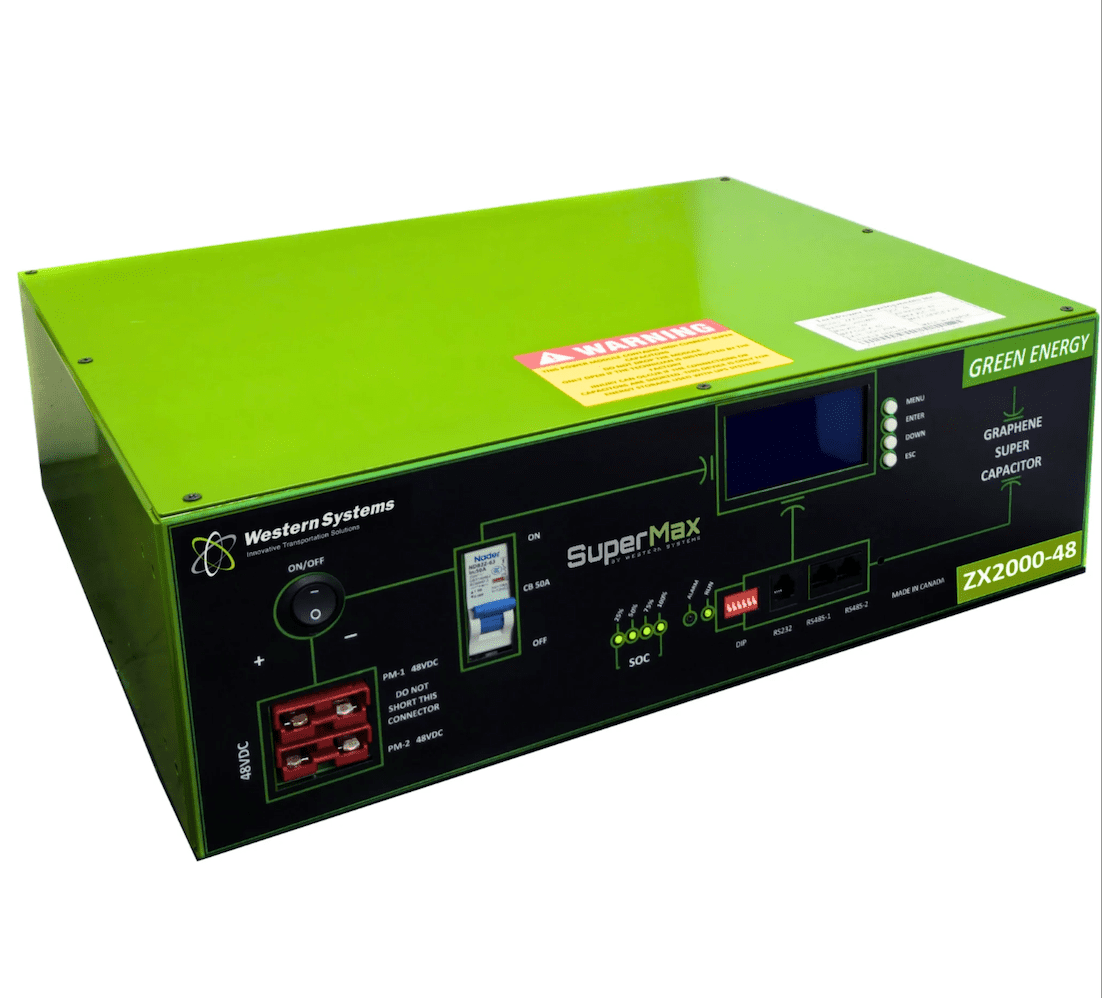
SuperMax™ is built for up to 30 years of service life, up to 200,000 charge and discharge cycles, operation from -40C to +60C, zero-clearance installation, and no cooling or heating requirements. It also includes a 4-button LCD control panel, LED indicators, and optional SNMP Ethernet to help crews verify cabinet status more quickly.
For agencies, that supports a shift from recurring replacement cycles toward a longer-term resilience strategy, especially at sites with harsh temperatures, frequent cycling, or limited maintenance access.
WS_SuperMax-Cutsheet (1 pager)_031026 (3)
How to Evaluate Long-Life Backup Power Across a Network
For agencies comparing batteries and supercapacitors in traffic cabinets, the best framework is usually operational, not theoretical.
A useful review starts with a few questions:
- Which sites regularly see extreme heat or cold?
- Which locations cycle backup power more often than expected?
- How much annual maintenance capacity is available across the network?
- Will the system fit within the cabinet without creating added space or thermal management concerns?
- What runtime and load requirements need to be supported?
In those discussions, form factor and electrical characteristics matter alongside service life. SuperMax™ is built as a 48 V nominal system with a 2000 Wh energy rating, modular design for capacity or redundancy, and shelf, rack, or vertical mounting options. Those details help agencies evaluate application fit while staying focused on the bigger goal: reliable intersection operations with fewer maintenance disruptions.
Planning The Next Resilience Upgrade
Backup power decisions shape more than outage recovery. They affect field maintenance demands, system uptime, and how confidently an agency can support reliable traffic operations across its network.
For agencies reviewing backup power strategies for traffic signal cabinets or ITS field infrastructure, Western Systems can help assess site conditions, runtime needs, and cabinet configuration requirements for long-life energy storage. Contact Western Systems today to learn more.