

Most drivers do not intentionally ignore sirens. They are distracted, boxed in, or unsure what traffic is about to do. For police, fire, and EMS, those few seconds of hesitation add up along the corridor and can directly affect response times.
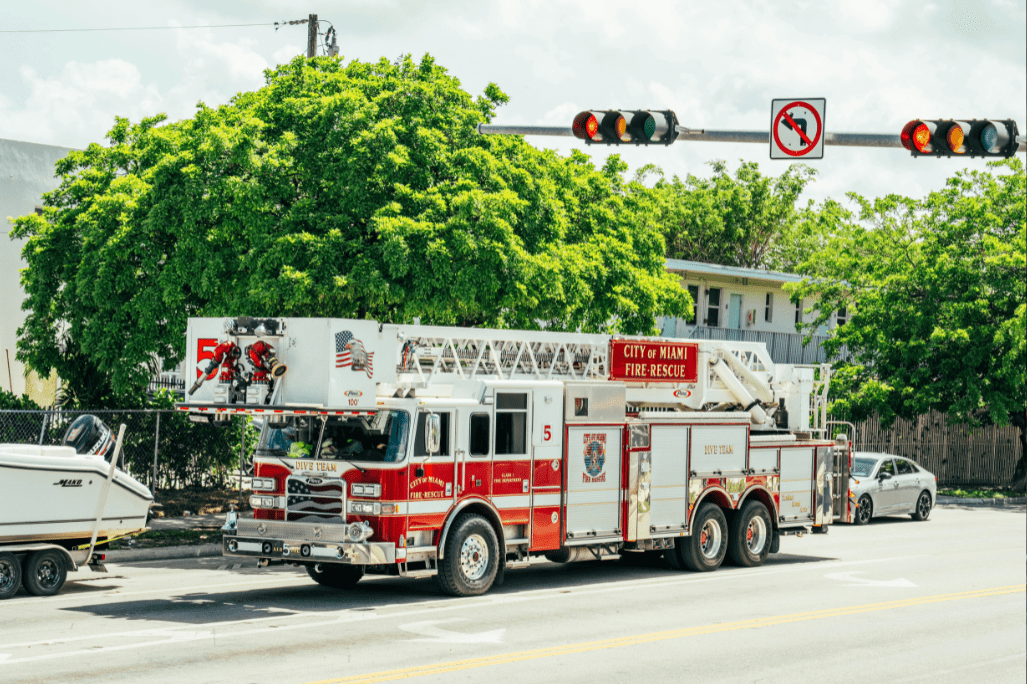
The Everyday Reasons Drivers Miss Sirens
In busy corridors, drivers are often surrounded by competing noise, infotainment systems, and complex lane choices. By the time an emergency vehicle is close enough to be heard, sightlines may already be blocked by larger vehicles. At a red light or in a turn pocket, many drivers feel there is simply nowhere safe to move. The result is a pattern that looks like indifference but is really uncertainty and limited information.
How Traditional Signals Limit Emergency Response
Conventional traffic signals treat every vehicle the same, regardless of who is trying to move through the intersection. Even with good signal coordination, a fire engine or ambulance can be trapped by red lights in a queue of stopped vehicles. Preemption systems that rely only on line-of-sight devices or older hardware can be inconsistent, especially in poor weather or complex geometry. This leaves agencies relying on driver behavior alone to clear paths during the most critical calls.
What Makes A Corridor “Smart” For Emergency Vehicles
A smart corridor uses connected infrastructure so that signals, cabinets, and field devices share real-time information about what is happening along the route. Instead of reacting only to a vehicle detected at the stop bar, the system can see an emergency apparatus approaching well upstream. Signal timing, phase calls, and clearance intervals can then be adjusted proactively to create green waves and give drivers time to make safe, predictable movements out of the way.
Preemption, Priority, And Connected Vehicles Working Together
Modern preemption and priority tools, like Yunex Traffic RSU and Tomar, combine several layers of technology to support emergency operations. Dedicated roadside units can communicate directly with equipped fleet vehicles, exchanging speed, location, and route information in real time. That data helps the corridor anticipate where green time is needed, not just where a vehicle happens to be at the moment. When integrated with existing controllers and cabinets, this approach can reduce stops, shorten response times, and cut down on hard braking events in mixed traffic.
The Role Of Edge Computing At The Roadside
Smart corridors increasingly rely on powerful devices mounted at or near the signal to process data right where it is generated. These roadside units act as small computers, validating thousands of messages per second from vehicles and infrastructure. By making decisions at the edge, the system is less dependent on a constant backhaul connection and can maintain high system uptime even in harsh conditions. This supports more reliable preemption operations and gives agencies confidence that critical messages are being handled quickly and consistently.
Giving Agencies Better Visibility Into Corridor Performance
For traffic engineers and public works teams, the value of a smart corridor lies not only in real-time response but also in the data that follows. Detailed logs of preemption events, queue lengths, and phase changes help staff understand exactly how an emergency run played out. Over time, agencies can use this information to refine routes, adjust signal coordination patterns, and address locations where drivers struggle to respond. Several cities are already using connected vehicle data to improve travel time reliability for both emergency vehicles and the everyday trips that share the road with them.
Safer Streets, Clearer Expectations For Drivers
When signals adjust in a coordinated way along a route, drivers see more consistent patterns and have clearer expectations at the next intersection. Longer advance greens, earlier pedestrian clearance, and well-timed transitions give people in regular vehicles time to move out of the way calmly. This reduces sudden lane changes and panic stops that can lead to secondary crashes. In turn, first responders can focus more on the incident ahead and less on navigating unpredictable traffic behavior.

Taking The Next Step Toward Smarter Corridors
Cities and counties across the West are beginning to evaluate how smart corridors and connected-vehicle preemption fit into their broader safety and reliability goals. For many agencies, the first step is simply understanding which routes matter most for emergency response and where signal timing is currently limiting performance. Western Systems partners with public agencies to assess corridor performance, design practical preemption strategies, and integrate connected vehicle capabilities into existing infrastructure.
To explore how a smarter corridor could support emergency response in a specific community, transportation leaders can connect with the Western Systems team and start a focused conversation about needs, constraints, and long-term plans.