
Signal timing complaints are one of the most common calls city traffic teams receive. Drivers sitting at a red light with no cross traffic, buses missing transfers, and long side-street waits all fuel frustration. AI is giving agencies new tools to identify where these issues originate, fix them faster, and reduce how often those complaints occur.
Below are five practical ways AI is already helping cities tackle signal timing complaints and improve corridor performance.
1. Turning Complaints into Measurable Performance Data
Most agencies know where the loudest complaints come from, but AI helps quantify what is actually happening at those locations. By using video analytics and AI-based detection, systems can measure red-light arrivals, red-light dwell time, and queue lengths in near-real time.
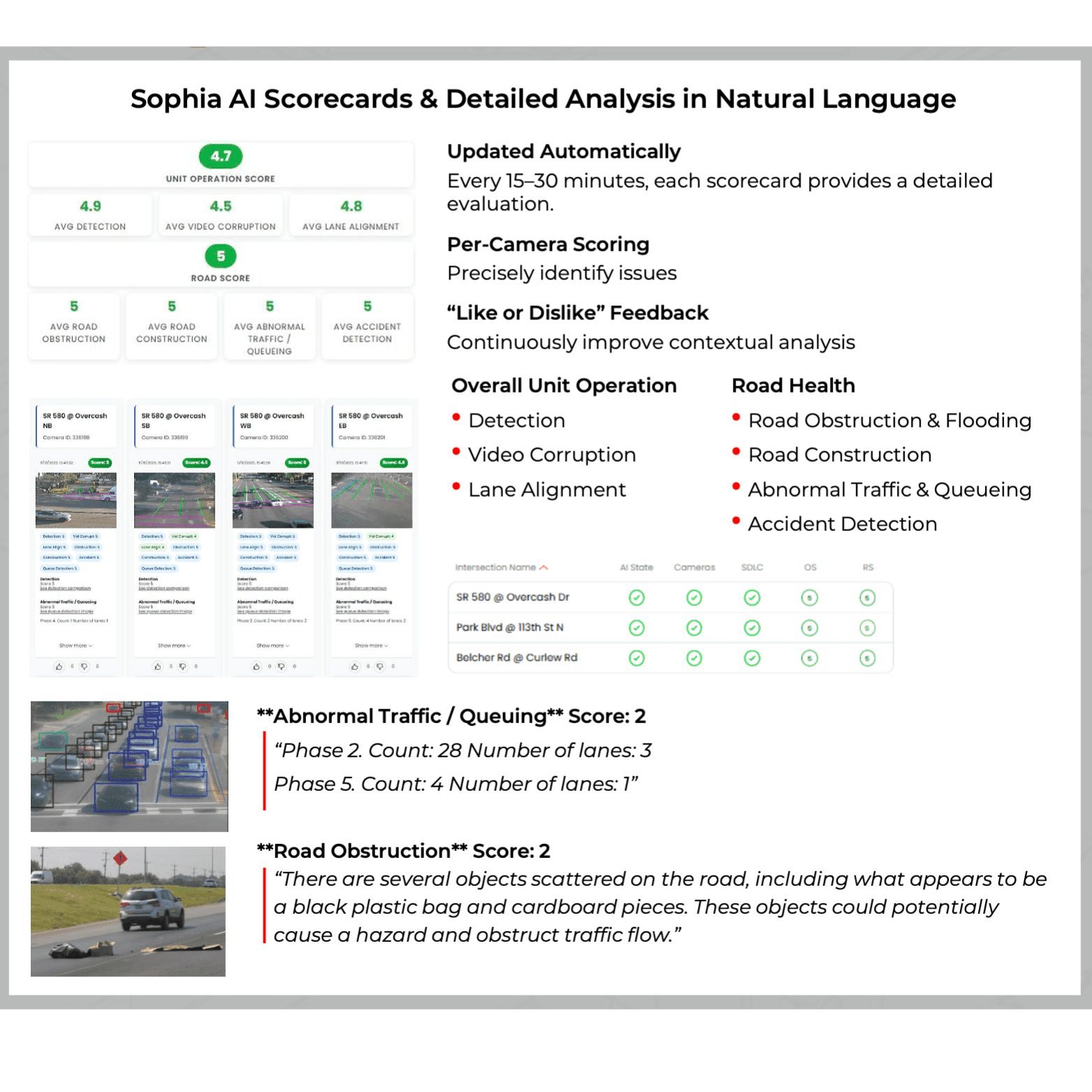
Platforms like Sophia AI take this a step further by continuously evaluating detection quality, camera performance, and traffic behavior every 15 to 30 minutes. Instead of waiting for a complaint or a field visit, traffic engineers can see where cameras have shifted, where abnormal queueing is starting to form, or where video quality is degrading. That kind of automated “second set of eyes” helps teams spot emerging timing issues early, so adjustments happen before frustration turns into a steady stream of calls.
2. Matching Signal Timing to Actual Demand, Not Averages
Traditional timing plans are built around historical counts and assumed patterns. AI-based detection and actuation systems allow timing to follow what is happening on the street today, not last year.
By continuously tracking vehicle and pedestrian demand, AI can extend green times when platoons arrive late, shorten phases when demand is low, and rebalance splits as conditions change. This helps reduce instances of drivers waiting at empty intersections or experiencing long red lights that no longer match current volumes, a major source of timing complaints in both suburban and urban corridors.

3. Learning Patterns to Smooth Out Recurring Trouble Spots
Signal timing complaints often spike around recurring events, including weekend traffic to recreation areas, seasonal tourism, and special events near stadiums and venues. AI systems are designed to learn these patterns over time and adapt automatically.
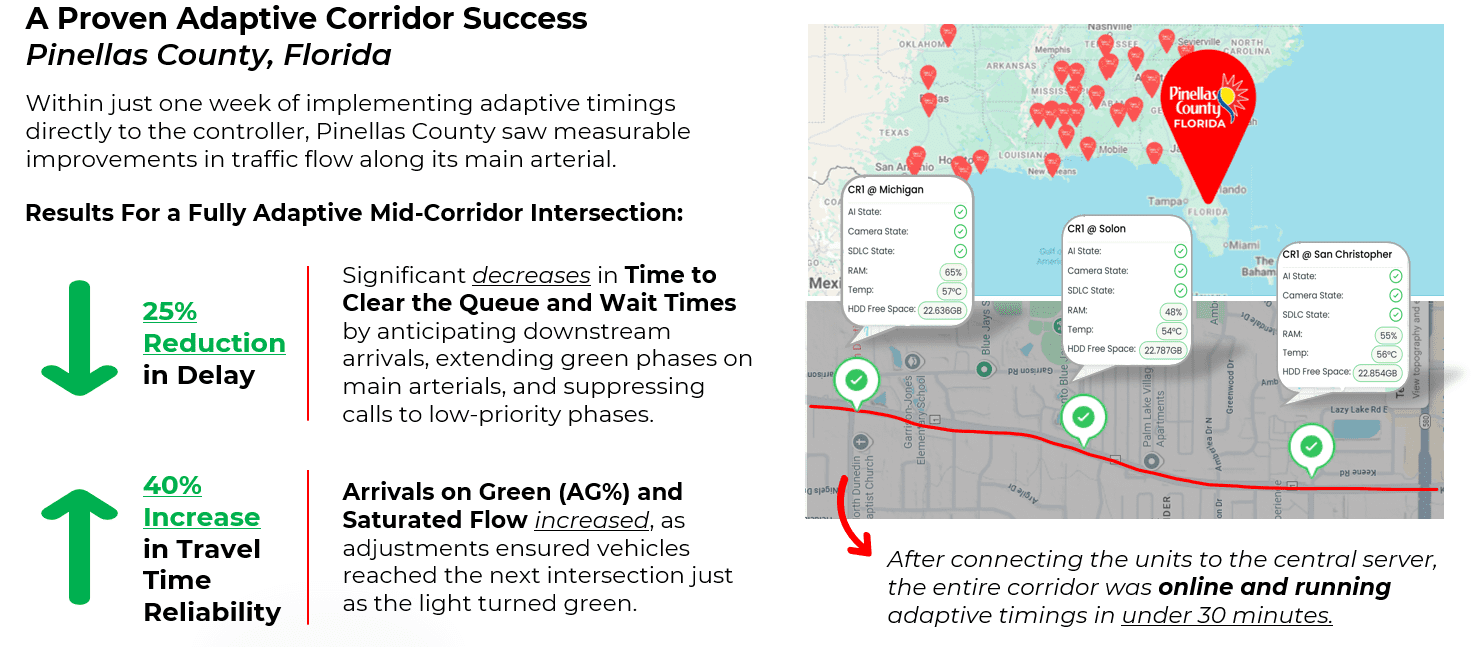
In Pinellas County, Florida, an AI-powered corridor control platform that analyzes video data enabled more responsive signal operations across a dense urban corridor. Publicly reported results showed more than a 25 percent reduction in delay and a similar reduction in emissions, saving drivers hundreds of hours and thousands of dollars in wasted fuel and time. Such gains directly reduce recurring frustrations that lead to complaints.
4. Coordinating Corridors so one “Bad” Light Does Not Take Blame
From the public’s perspective, a single “bad” traffic light is often blamed for problems that actually come from poor coordination along an entire route. AI provides agencies with better visibility across the entire corridor, not just at a single intersection.
With cloud-connected, AI-enabled platforms, traffic teams can see how offsets, progression, and dwell times interact along major arterials. When delay spikes, they can quickly determine whether the issue is a single signal, an upstream bottleneck, or changes in travel patterns. Improved coordination and travel time reliability along the whole corridor means fewer calls about that one “problem” signal, even when the real fix involves several locations working together.
5. Reducing Field Visits so Engineers Can Focus on Communication
A major source of frustration for both residents and staff is the time required to investigate and adjust schedules following a complaint. AI-based systems that work with existing cameras and infrastructure reduce the need for repeated field visits just to understand what is happening.
By accessing live and historical performance data from the office, engineers can quickly identify issues and test changes, improving system uptime while reducing field maintenance. This frees up time for outreach, education, and proactive communication with the public, so when timing changes are made, residents understand the “why” behind them and are less likely to keep calling about the same signal.
Bringing AI Into The Signal Timing Toolbox
AI will not eliminate every timing complaint, but it provides agencies with better information, more responsive tools, and a clearer view of how corridors are performing. Cities that combine AI-based detection, adaptive timing, and corridor analytics are already seeing measurable improvements in delay, emissions, and travel time reliability, which translates directly into fewer frustrated calls and emails.
For agencies exploring how AI can support signal timing, detection, and corridor management, the Western Systems team can help connect current operational goals with practical technologies that fit existing infrastructure. Connect with a regional traffic solutions specialist today.