
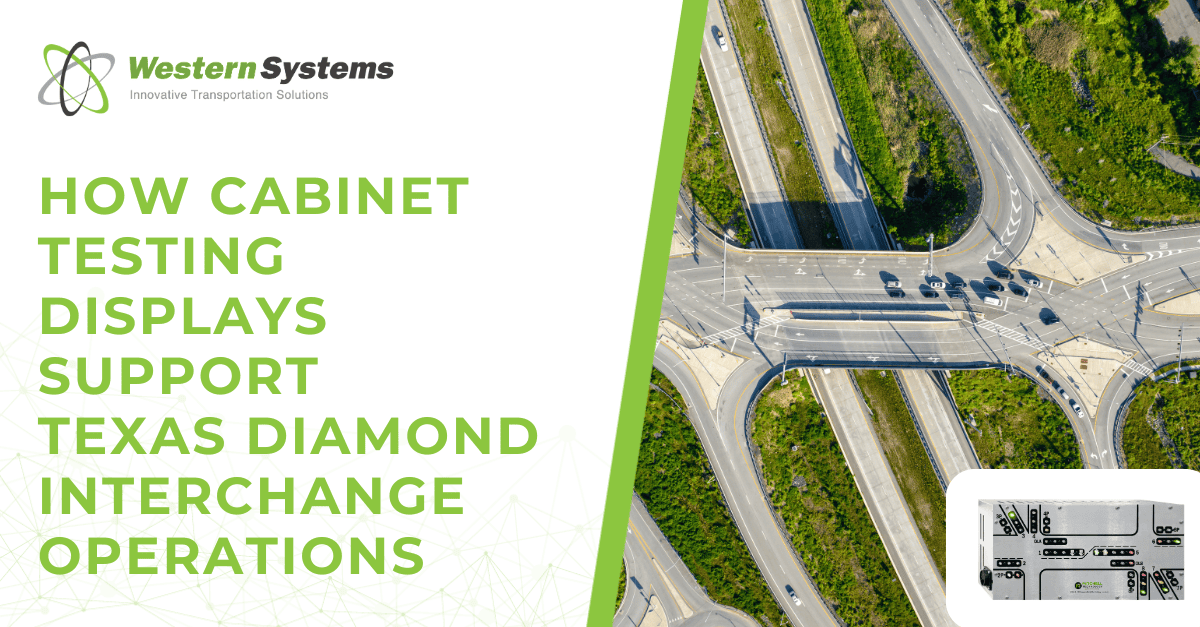
Texas Diamond Interchanges ask a lot of signal cabinet teams. With multiple movements, overlaps, and ramp coordination points operating in a tight footprint, agencies need a clear way to verify cabinet behavior before equipment is placed into service.

Texas Diamond Interchanges Depend on Precise Signal Coordination
A Texas diamond interchange is a signalized interchange layout commonly used where a surface street crosses a freeway or major roadway, with ramps connecting traffic between the two. Unlike a simple intersection, it typically involves two closely spaced signalized ramp terminals that must work together so vehicles can move safely between the arterial, entrance ramps, exit ramps, and turning movements.
That close spacing is what makes signal coordination so important. A mistimed output, missed overlap, or unclear phase indication can affect multiple movements simultaneously, creating issues for local traffic, ramp queues, and freeway access.
Cabinet testing displays give technicians a direct visual reference for what the cabinet is doing. Instead of relying solely on controller status screens or field observations, teams can view signal outputs in a layout that reflects the interchange they are preparing to support.
Layout-Specific Displays Make Troubleshooting More Intuitive
The Model 578DL-1 Diamond LED Test Display is configured specifically for Texas Diamond intersection layouts. That matters because a general cabinet test setup may show whether circuits are active, but it may not help technicians quickly understand how those outputs relate to a diamond interchange sequence.
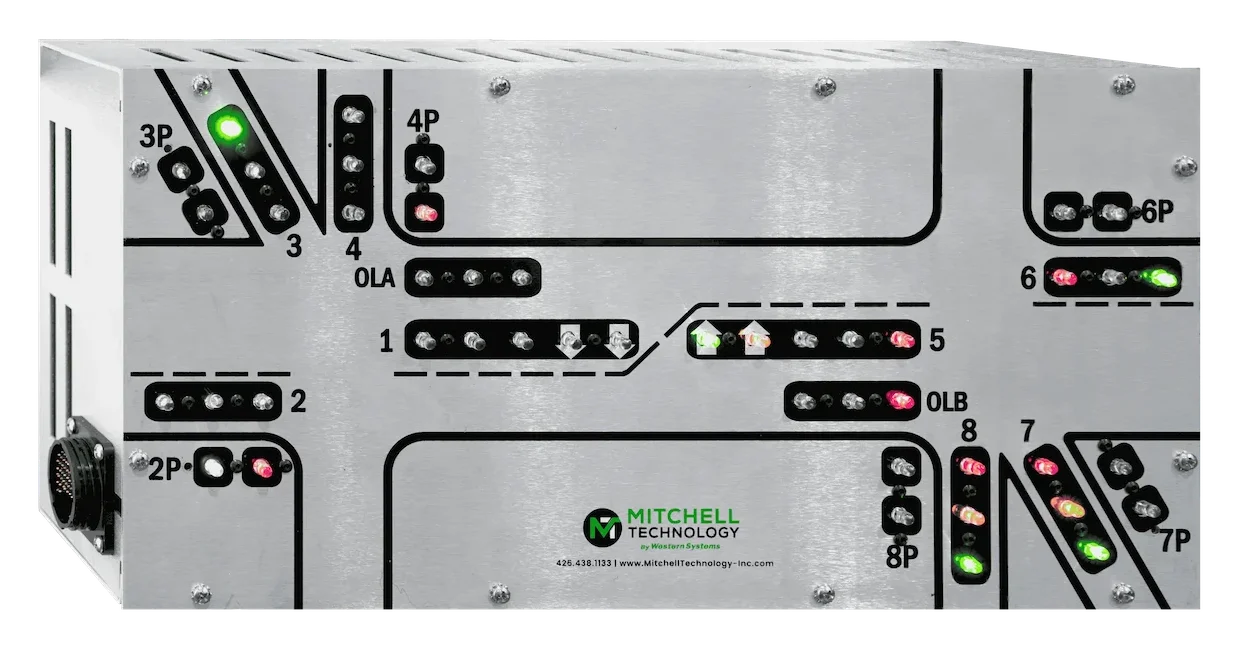
With a layout-specific display, the visual pattern is easier to follow during testing, troubleshooting, demonstration, and burn-in periods. Technicians can watch the cabinet outputs in a format that more closely reflects the field condition, which helps reduce confusion during cabinet checks.
This is especially useful before a cabinet is released for field installation. When the display matches the operating layout, agency teams can verify expected behavior earlier in the process and address issues before they become field calls.
Dedicated Phase 3 and Phase 7 Monitoring Supports Diamond Operations
Phase 3 and Phase 7 activities can be especially important in diamond interchange operations because these phases often support movements that must be carefully coordinated with adjacent ramp and arterial traffic. Dedicated monitoring of these phases gives technicians a clearer view of how those outputs respond during test cycles.
That visibility helps reduce guesswork during cabinet setup. A technician can confirm whether the cabinet is producing the expected indications without disconnecting or disrupting the wiring configuration used for testing.
LED Indication Helps Teams Verify Outputs Quickly
A bright LED indicator provides a simple advantage during cabinet testing: it turns electrical behavior into a quick visual check. The display gives technicians a clear indication for Phases 1 through 8, as well as for 2P, 4P, 6P, and 8P.
That kind of visibility is useful in both shop and field settings. In a shop environment, it can support burn-in and demonstration work before a cabinet is shipped or installed. In the field, it can help crews confirm cabinet outputs when troubleshooting a site that needs fast, accurate attention.
Overlap Monitoring Adds Clarity Where Timing Gets More Complex
Diamond interchange operations often involve more than basic phase calls. Overlaps may be used to support traffic flow, ramp progression, or turning movements that depend on multiple signal conditions working together.
With OLA and OLB overlap monitoring, technicians can verify that overlap activity occurs as expected under test conditions. This gives agencies another layer of confirmation before cabinet operations are trusted on the street, especially at locations where signal coordination affects travel-time reliability along a corridor.
Integrated Connections Help Reduce Testing Friction
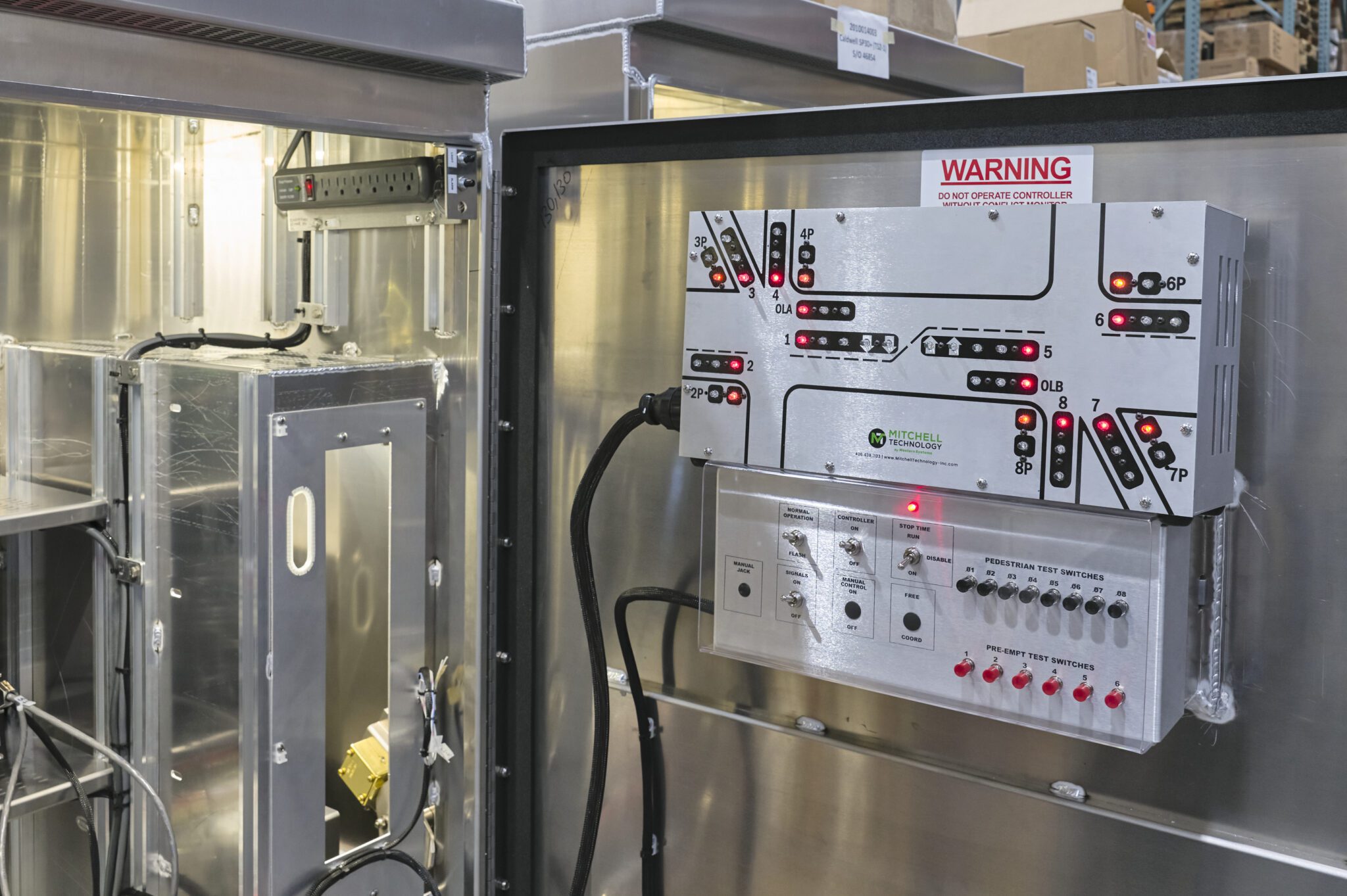
Testing equipment should make cabinet work easier, not create another source of confusion. An integrated harness assembly streamlines the interface between the cabinet and the display, allowing technicians to maintain cabinet connections while monitoring signal outputs.
That is especially useful for agencies managing multiple cabinets, custom configurations, or demanding project schedules. When teams can connect, test, observe, and troubleshoot with fewer setup steps, it leads to greater consistency throughout the cabinet testing process.
Customization Helps Agencies Match Field Needs
No two agency networks are exactly the same. Cabinet standards, interchange layouts, cable length requirements, and testing workflows can vary depending on the jurisdiction and project type.
That is where flexible test display configurations become valuable. Under Western Systems’ care, these cabinet testing displays have continued to evolve, with new configurations and custom builds tailored to agency needs. Some projects may start from familiar display designs, while others require a more tailored approach for a specific cabinet environment or operational requirement.
Supporting More Reliable Interchange Operations
For drivers, the work behind signal cabinet testing is rarely visible. What they experience instead is the result: steady signal operation, fewer unexpected disruptions, and more predictable movement through a busy interchange.
At Texas Diamond Interchanges, small cabinet issues can quickly affect ramp queues, arterial flow, and corridor reliability. The Model 578DL-1 Diamond LED Test Display helps agency teams verify phase outputs, pedestrian indicators, and overlap activity before a cabinet is trusted in the field. That added clarity supports more confident troubleshooting, stronger system uptime, and a smoother handoff from the shop to the street.
To learn more about cabinet testing displays for Texas diamond interchange operations, contact Western Systems or visit Mitchell Technology to discuss the right display configuration for upcoming cabinet testing, demonstration, or field support needs.