
Urban and suburban corridors are under pressure from growing traffic, aging infrastructure, and rising public expectations. Connected vehicles and smarter roadside systems give agencies new tools to manage that pressure in real time. The question is no longer whether this technology is coming, but how it will shape corridor efficiency and day-to-day operations.
From Isolated Vehicles to Connected Corridors
Connected vehicles turn individual trips into a continuous stream of data about how a corridor is performing. Instead of relying solely on periodic counts or manual checks, agencies can monitor travel time reliability, delays, and queue patterns as they evolve. That live feedback helps engineers identify where recurring bottlenecks occur and which intersections have the greatest impact on corridor performance.
The Roadside Unit Becomes the Corridor’s Communication Hub
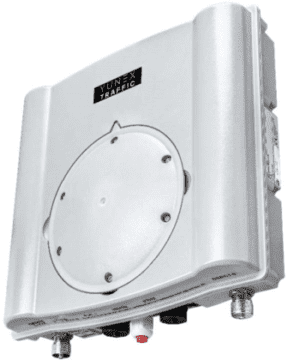
To turn connected vehicle data into real operational value, agencies need a reliable link between roadside infrastructure and onboard units. The Yunex Traffic Roadside Unit 2X (RSU2X) serves as the communication and application hub for bidirectional V2X messaging. It enables the transmission of information, such as speed limits, while also receiving onboard unit messages in real time. That two-way exchange creates a more precise picture of current conditions, supporting more efficient traffic control, fewer crashes, and lower emissions across a corridor.
Real-Time Signal Coordination Instead of Constant Retiming
Traditional coordination plans can quickly become outdated as land use, traffic volumes, and travel patterns shift. With connected-vehicle data, timing plans can be updated more frequently or supported by adaptive logic that responds to real-time conditions. That means smoother platoons, safer progression speeds, and fewer unnecessary stops at well-known frustration locations along the route.
AI-Based Detection Strengthens Operations at Every Approach
Modern AI detection and actuation systems use camera feeds and advanced algorithms to identify vehicles, bikes, and pedestrians more accurately than legacy detection. That accuracy supports better phase calls, fewer false gaps, and more consistent service for side streets and vulnerable road users. When combined with V2X insights, AI detection can pinpoint specific approaches that are reducing corridor performance, enabling targeted improvements where they matter most.
Preemption and Priority that Protect the Whole Corridor
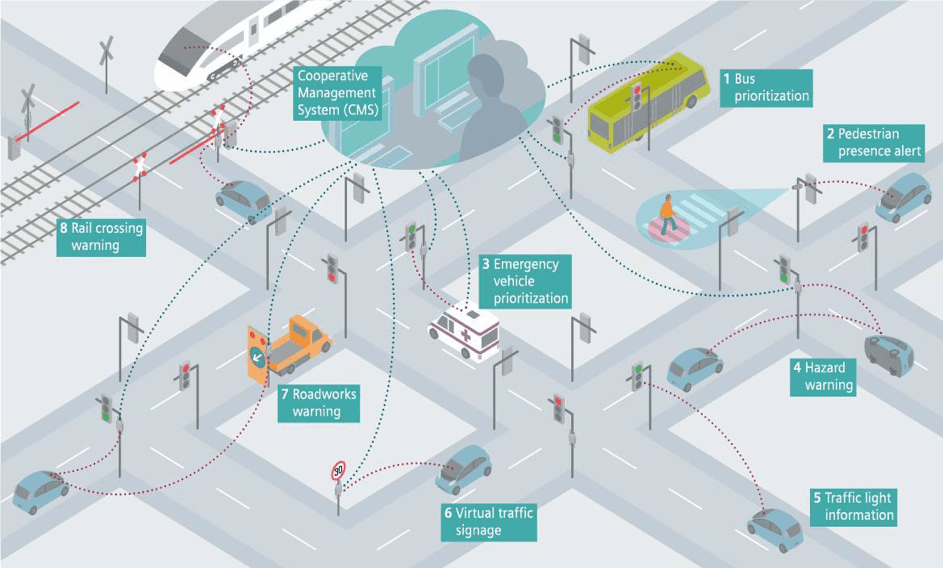
Emergency preemption and transit priority are critical for public safety and mobility, but they can disrupt coordination if not managed carefully. Connected-vehicle-ready preemption systems allow agencies to grant green time when it is truly needed while still protecting corridor efficiency. By tracking where and how often priority events occur, teams can fine-tune timing plans, improve uptime, and maintain reliable travel for emergency responders, buses, and general traffic.
Future-Proof Hardware that Can Keep Up with the Data
Corridor efficiency depends on field technology that performs under real-world load. The Yunex Traffic RSU2X supports both 802.11p/DSRC and C-V2X, making it a flexible, future-ready option for connected corridors. It is powered via Power-over-Ethernet, built for outdoor conditions with integrated antennas, and designed for reliable edge processing in high-traffic environments. Multiple connectivity interfaces make it easier to integrate into existing infrastructure and expand over time.
Building a connected corridor roadmap that fits local goals
Every corridor is different, so the path to connected vehicles and higher efficiency should reflect local needs, budgets, and staff capacity. Some agencies start with priority and preemption upgrades at key intersections, then layer in AI detection and RSU deployments to expand V2X coverage over time. With the right roadmap, signals can be managed as a living system rather than a set of isolated intersections.
For agencies across the western United States ready to explore how connected vehicle technology can improve corridor operations, Western Systems partners with teams to plan, phase, and support these efforts so corridors work better for everyone on the road. Contact us today to learn more!