
Renton, WA, is moving more of its traffic signals from fixed daily schedules to real-time operation to help peak-hour traffic move more efficiently along key corridors. The goal is straightforward: reduce unnecessary delays at busy intersections and make trips more predictable for residents, workers, and freight.

Why Renton, WA, is Updating Signal Timing Now
Renton has seen steady growth in traffic on corridors that serve downtown, regional highways, and neighborhood destinations. Morning and afternoon peaks, in particular, can leave long queues at signals that are still running on preplanned timing. By expanding Yunex SCOOT’s Adaptive Signal Control, the city is taking a practical step to align green time with how people actually travel during the day, not with how older timing plans assume they travel.
Council-Approved Expansion of Adaptive Signal Control
At its November 10 meeting, the Renton City Council authorized a project that adds adaptive operation at seven additional intersections, bringing the citywide total to 34 signals. These locations had been running on preset schedules that change by time of day but do not respond to real field conditions. The new equipment and configuration will allow those signals to continuously react to live traffic, as described in the original Renton Reporter coverage.
Corridors Where Drivers Will Notice The Difference
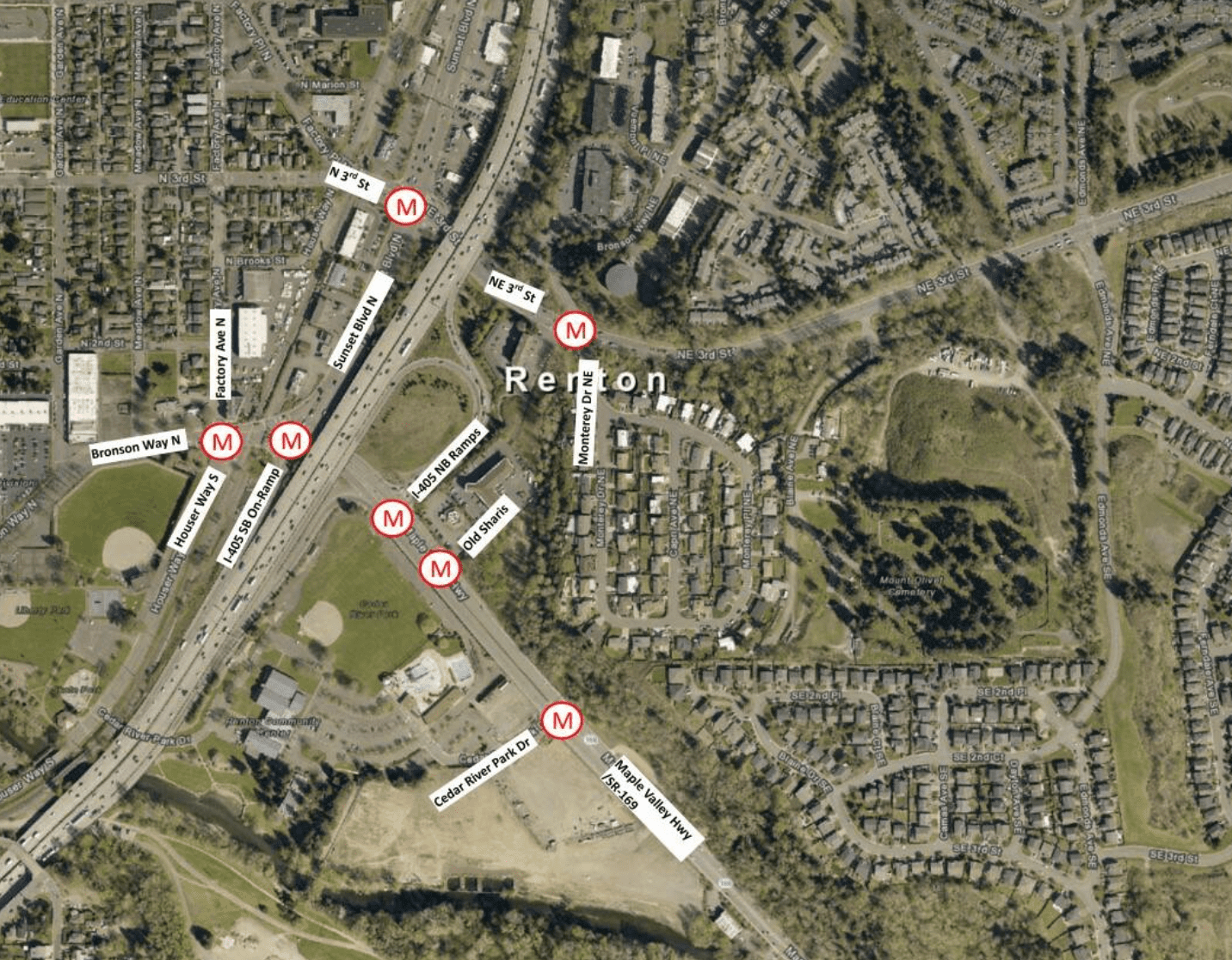
The city is focusing this upgrade on NE Third Street from Monterey Avenue NE to Sunset Boulevard, Sunset Boulevard from NE Third Street to the I-405 southbound on ramp, and Maple Valley Highway/Bronson Way, and Bronson Way/Maple Valley Highway from Factory Avenue N/Houser Way to Cedar River Park Drive. These are corridors where school traffic, commute trips, and local errands all compete for the same green time. Coordinating signals across these stretches gives Renton a way to move more vehicles through as a corridor rather than treating each intersection as a separate problem.
How Adaptive Signals Respond During Peak Periods
New all-in-one detection equipment at the stop bar and farther upstream will measure how many vehicles arrive, how long the queues form, and how quickly they clear. That data is fed into the city’s Split Cycle Offset Optimization Technique (SCOOT) adaptive control system, which continuously updates signal timing in small increments. With the Yunex Traffic SCOOT platform, distributed and supported in the region by Western Systems, green time can be shifted toward movements that need it most during peaks without waiting for a human to rewrite timing plans.
Measured Results from Renton’s Earlier Yunex SCOOT Deployment
Before deciding to expand, Renton evaluated SCOOT’s performance in an earlier corridor deployment in 2017 and 2018. The study found that average weekday travel times from Oakesdale Avenue SW to 128th Avenue SE dropped by about 8% westbound and 13% eastbound, even as traffic volumes increased. During midday and afternoon peaks, travel times improved by roughly 3-12%, and throughput rose by up to 6.5% in the morning peak, meaning more vehicles cleared the corridor in the same period without major construction or new lanes.
Benefits for Operations, Field Crews, and System Uptime
Adaptive signal control also changes how staff manage the system day to day. Instead of relying heavily on static timing plans that require frequent manual updates, engineers can monitor how SCOOT responds to patterns such as school release times, weather, and special events, then fine-tune as needed. Fewer complaints about “stuck” signals can translate into fewer urgent field calls, allowing crews to focus on preventative work that supports long-term reliability and higher system uptime.

Building a Smarter Signal Network, One Corridor at a Time
Renton’s expansion of adaptive signals shows how a city can use data, proven software, and modern detection to improve corridor performance without significant roadway widening. Western Systems has been working with the city and Yunex Traffic to provide equipment, training, and practical support so Renton’s team can keep refining the system as traffic patterns evolve.
Agencies and traffic engineers across the West exploring similar upgrades can connect with the Western Systems team to discuss how adaptive signal control could help manage peak periods on their corridors.