
The 2026 ITE Western District Annual Meeting brings transportation professionals to Bellevue from June 28 to July 1. It is a strong setting for a conference focused on traffic operations, safety, resiliency, and real-world mobility because attendees can step out of sessions and move through the systems they work on every day.

What to Expect
The annual meeting program reflects many of the issues agencies are focused on right now, including safety, speed management, AI video analytics, bus improvements, roadway design, and transportation resiliency. For attendees working in ITS, TSMO, and signal operations, this year’s event is especially relevant.
Western Systems will be part of that conversation through multiple sessions on Monday, June 29. In the 2D AI Video Analytics session, Austin Larman is scheduled to present “Enhancing Intersection Reliability and Safety Through Vision-Based Multimodal Detection.” Later in the 4D Technology and Resiliency session, Lee Hansen is scheduled to present “Data-Driven Signal Operations for High-Growth Regions: Lessons for Washington Agencies.” Kai Antrim is also listed with presentations on WSDOT’s wrong-way driving alert pilot on SR-18 and adaptive signal control in the City of Federal Way, while Mike Olsen is scheduled to present “Cabinet-Integrated Resiliency Strategies for Weather-Driven Outages in Seattle.”
Getting Around
One of the most interesting parts of this year’s location is how easy it is to experience transportation infrastructure between sessions. The Bellevue and Seattle area gives attendees the chance to ride regional transit, move through dense urban centers, and see how public space and transportation systems work together in practice.
The project brief also points to a particularly fitting regional experience: riding the Link light rail and crossing Lake Washington via the floating bridge corridor. That kind of trip is more than sightseeing. For transportation professionals, it is a way to move through a working system and see the region’s infrastructure in action.
Places to Explore
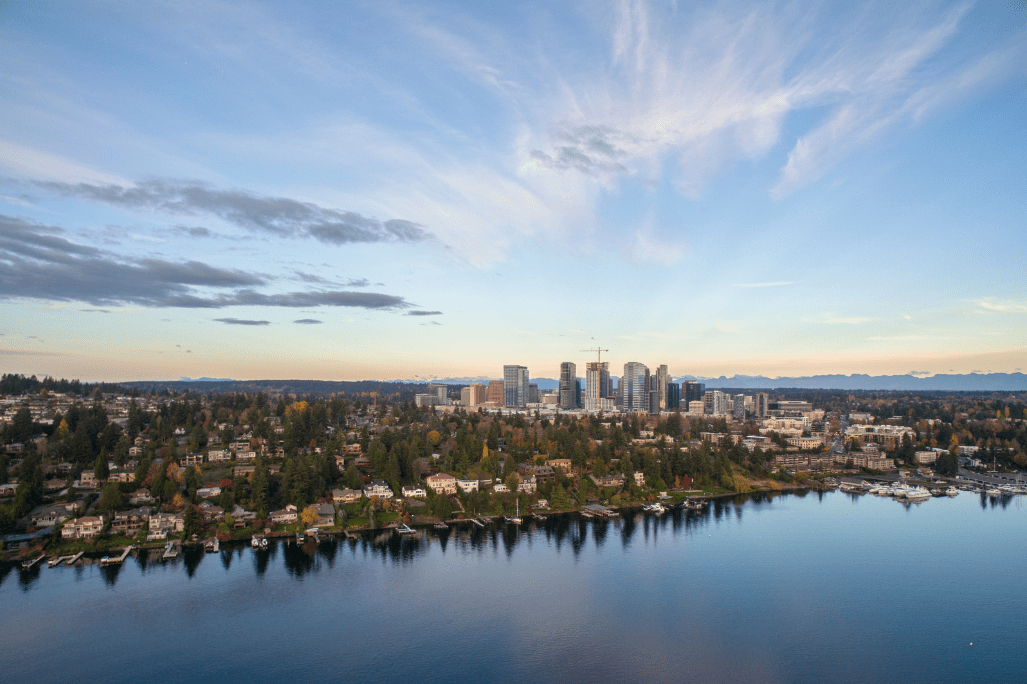
Bellevue offers several easy stops for attendees who want to reset between sessions. Meydenbauer Bay Park and Bellevue Downtown Park are good examples of places where people can step away from the conference pace without leaving the city behind. Lake Washington and Mercer Slough also offer a different view of the region’s landscape and transportation context.
The brief also encourages attendees to explore Seattle Center, the Amazon Spheres, and the Microsoft campus area. Together, these places show the range of environments that define the region: civic, natural, urban, and technology-oriented. That mix gives visitors something useful to observe, not just somewhere to spend time.
Why It Matters
The value of this meeting is not only in the session rooms. It is also a chance to keep discussions going in a place where transportation systems are visible and active. Bellevue supports that naturally. You can attend a session on signal reliability, resiliency, or AI-based operations, then step outside and keep thinking about how those ideas connect to actual movement through a city and region.
That is also why Western Systems’ participation in the session matters here. The topics listed in the program are tied to issues agencies are actively working through now: intersection reliability, safety, data-driven operations, wrong-way driving, adaptive signal control, and weather-related resiliency. These are not abstract ideas. They are practical concerns that affect daily mobility and the agency’s performance.
Plan Your Visit
The 2026 ITE Western District Annual Meeting in Bellevue offers a strong technical program and a setting that makes the subject matter feel immediate. Register for the event, review the program, and plan time to explore the region between sessions. It is a chance to learn from peers, see important topics discussed in depth, and experience the kind of transportation environment the industry is working to improve.