

Answering what works, and what doesn’t, in low-visibility conditions
At Western Systems, we get this question often from cities, counties, and DOTs across the western U.S.: “What detection technology should we be using in snow and fog?”
It’s a fair concern. Low visibility doesn’t just affect human drivers; it also impacts how detection systems perform. Some sensors are barely affected by snow or fog. Others struggle the moment visibility drops. The key is understanding how each technology behaves under different weather conditions, and when a multi-sensor approach makes sense.
Here’s how we break it down.

Radar is the Most Weather-resilient Option
Radar is our go-to recommendation for agencies that deal with frequent snow, dense fog, or both. Since radar uses radio frequencies rather than light, it isn’t impacted by visibility issues. It can detect vehicles accurately through heavy precipitation, low light, and even in areas with frequent plowing and snow buildup.
Pole-mounted radar also holds up well in high-maintenance zones—fewer false calls and fewer field visits.

Thermal Imaging Can See What Video Can’t
Thermal detection technology captures heat signatures from vehicle engines, bicycle tires, and even pedestrian movement. That makes it a smart choice for early mornings, snowy evenings, or fog-heavy areas where optical cameras lose contrast.
We’ve seen agencies succeed by pairing thermal imaging with radar to cover different visibility ranges, particularly in cold valleys and mountain passes.
LiDAR Works Well, Until Snow Starts Falling
LiDAR creates incredibly detailed 3D maps by bouncing laser beams off surfaces. In clear weather, it’s one of the most precise detection tools available. But during heavy snow or dense fog, those laser beams scatter—leading to detection loss.
Some LiDAR systems now include real-time filtering to reduce this interference, but in our experience, LiDAR is best used alongside radar or AI platforms in regions where weather is a known issue.
AI-based Detection Adjusts as Conditions Change
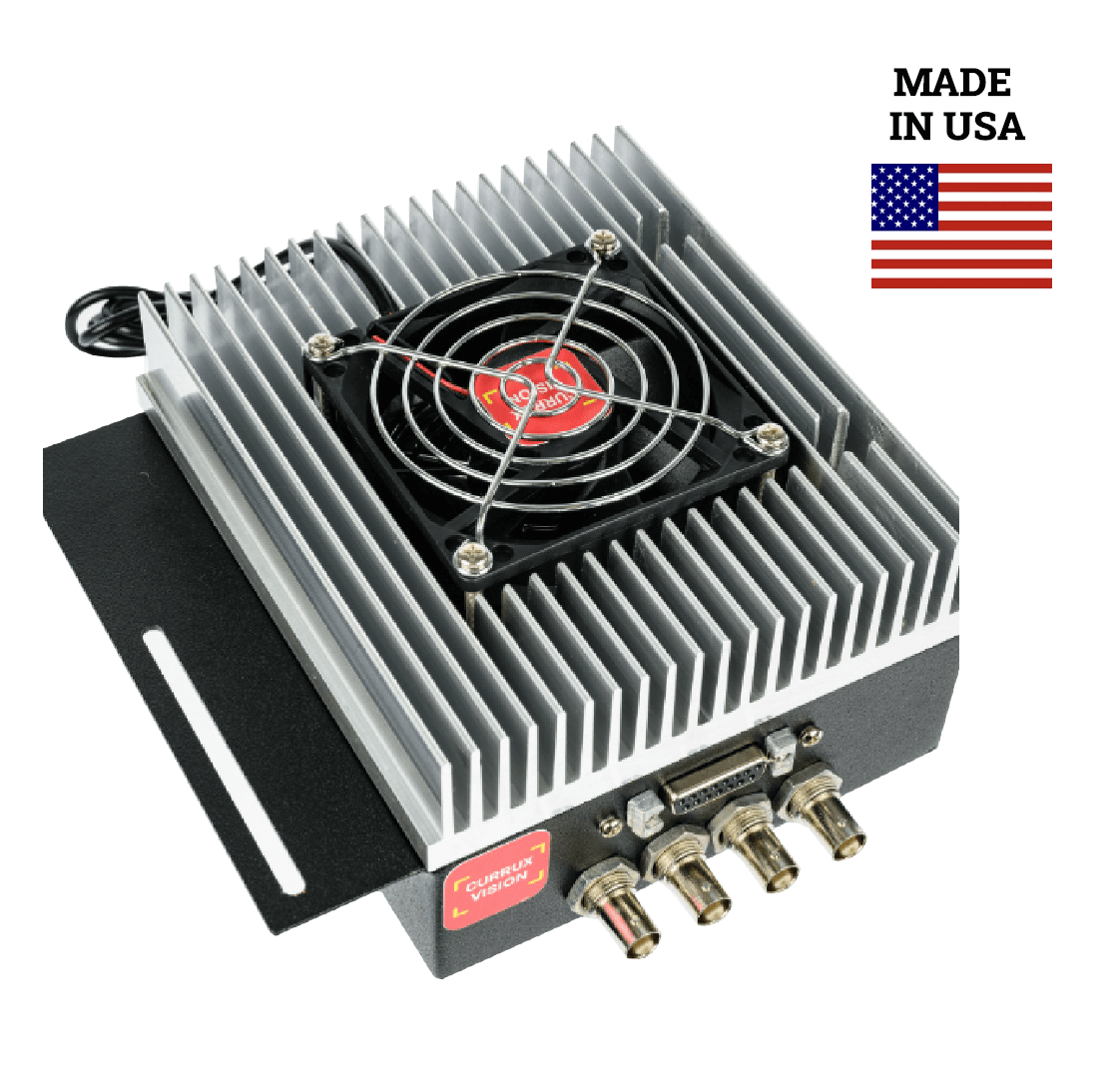
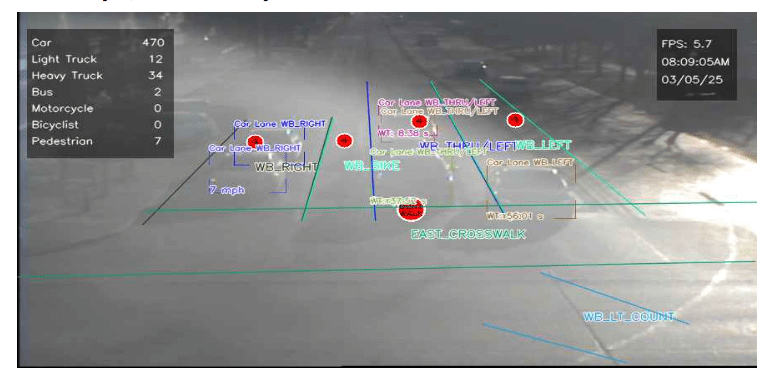
Our AI-based detection and actuation platform uses live data inputs from multiple sensor types to continuously refine detection logic—even as visibility shifts.
That means better accuracy, smarter timing decisions, and fewer false calls—even during surprise snow squalls or rolling fog events. AI also supports performance monitoring, making it easier for agencies to catch problems before field issues occur.
Video Detection Alone has Limits
While video has long been a traffic detection standard, it has clear weather limitations. Snowfall, headlight glare, fog, and nighttime conditions can all reduce detection accuracy. Even a snow-covered camera lens can knock a system offline.
Agencies relying solely on video often face increased field calls during winter—something we help solve by introducing layered detection strategies.

Multi-sensor Systems Perform Best in Winter
The most resilient systems we’ve seen are the ones that combine multiple detection methods. Radar handles precipitation. Thermal fills in visibility gaps. AI filters noise and corrects for changing conditions in real time.
These systems help maintain system uptime, reduce technician callouts, and support smoother travel time reliability for drivers—even in the worst weather.
Don’t Overlook Bicycle Detection in Winter
Winter detection isn’t just for vehicles. SiBike bicycle detection and other smart mobility tools need to function in snow, fog, and rain as more cities prioritize multimodal access.
We recommend radar-based or app-integrated systems that can recognize bikes in all conditions—supporting complete streets and Vision Zero goals without seasonal gaps.

Our Takeaways:
- No one sensor fits all weather conditions: Each has tradeoffs in visibility, precision, and uptime.
- Radar performs best in snow and fog: Reliable through precipitation and low light.
- AI adapts to changing conditions: Improves accuracy by using real-time data.
- Multi-sensor systems are most resilient: Combining radar, AI, and thermal covers more scenarios.
- We help agencies stay reliable in all seasons: From mountain passes to fog zones, we’ve seen what works.
Ready to Prepare Your Intersections for Snow and Fog?
Explore our AI-based detection solutions, bike detection tools, and real-time traffic management platforms. Contact us to speak with a territory manager about what will work best for your region.