

Every driver knows the moment when the light turns yellow, and they have to decide whether to stop or go. Most people choose to accelerate, not because they want to take a risk, but because they believe they have enough time to make it through safely. That small misjudgment, repeated thousands of times each day, plays a major role in red-light violations and intersection crashes nationwide.
Cities are now turning to advanced AI detection systems to better understand that behavior and design signal timing that reflects how people actually drive. With real-time data and adaptive signal control, transportation agencies are discovering new ways to enhance safety without compromising traffic flow.
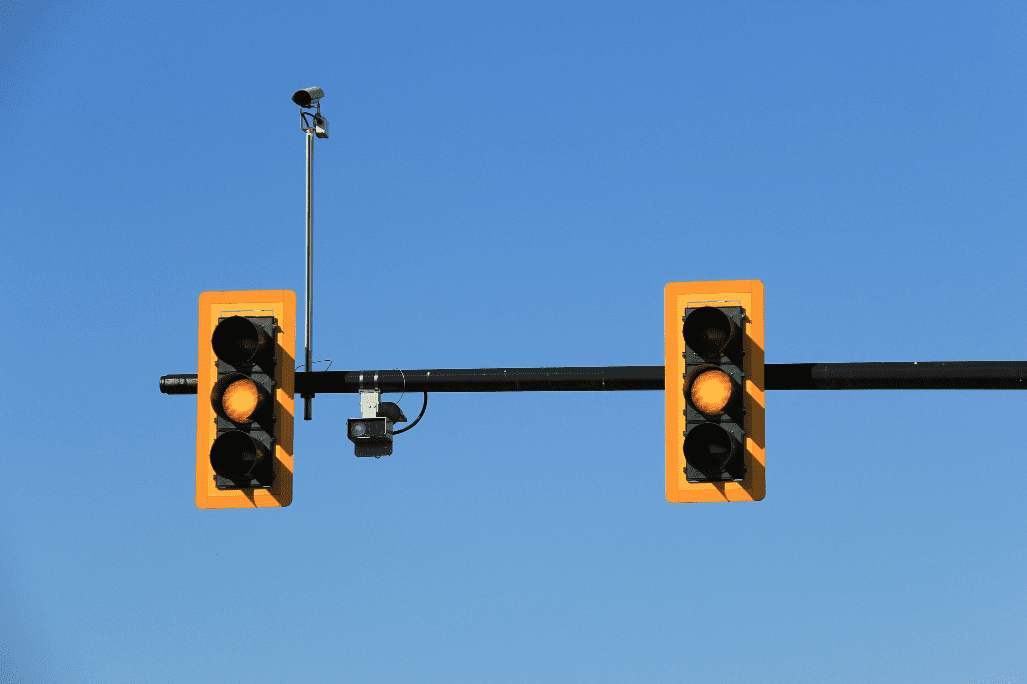
Why Do Drivers Speed Up at Yellow Lights?
Drivers tend to speed up at yellow lights because they believe they can make it through safely. The decision depends on several factors, such as approach speed, distance to the intersection, and even road slope. Traditional fixed-time signal plans cannot always account for these variables, so drivers often face inconsistent timing.
When a light stays yellow for what feels like “too short” a time, the result is confusion and hesitation. This is where smarter detection plays a crucial role, enabling engineers to design timing based on how drivers actually behave in real-world conditions.
The Safety Impact of Misjudged Timing
A mistimed yellow doesn’t just slow traffic; it can create serious safety risks. Drivers who enter too late may collide with cross-traffic that has already begun to move. According to the Federal Highway Administration, red-light running causes hundreds of fatalities and tens of thousands of injuries each year. Many of these crashes happen not because of intentional violations, but because of timing that doesn’t match real-world driver behavior.
Agencies are increasingly focused on data-driven approaches that help balance safety, efficiency, and driver comfort at intersections.
How AI Detection Helps Time It Right
Western Systems supports agencies in implementing Currux Vision’s AI-Based Detection and Actuation System, an intelligent platform that utilizes computer vision and machine learning to monitor vehicle approach speed, size, and trajectory in real-time. Unlike older loop or radar systems, it continuously learns from actual traffic patterns.
This enables the system to provide precise detection data, which can be used to optimize yellow and red clearance intervals. The result is a more accurate signal timing, fewer violations, and smoother intersection operation.
Turning Real-Time Data into Safer Intersections
AI-based systems provide engineers with detailed visibility into how drivers interact with signals throughout the day. They can observe how often vehicles arrive late, how different weather or lighting conditions affect approach speeds, and how adjustments to yellow intervals impact overall traffic flow.
With this data, traffic teams can make informed decisions remotely, rather than relying solely on field observation. Over time, these insights lead to a more adaptive and evidence-based approach to signal management.
Seamless Integration with Existing Infrastructure
Currux Vision’s system integrates seamlessly with modern NEMA traffic cabinets and networked infrastructure. When paired with connected traffic cabinets and communication devices, such as remote network units, agencies gain access to live data, health monitoring, and on-demand video from each intersection.
These capabilities enable early identification of signal issues and improve system uptime without increasing field maintenance demands.

Safer Streets and More Predictable Travel
Better yellow light timing means fewer last-second decisions for drivers and safer intersections for everyone. AI-based systems create a more predictable traffic flow, providing both motorists and pedestrians with a clearer understanding of signal behavior. For agencies working toward Vision Zero or corridor safety goals, this technology delivers tangible results that build public trust.
Building Smarter, More Reliable Intersections
As cities continue to invest in intelligent transportation systems, AI detection and adaptive timing are becoming essential tools for safer and more efficient traffic management. Western Systems supports agencies across the western United States with reliable, data-driven technologies that integrate seamlessly into existing infrastructure. Contact us today to learn more!